How to Create Printable Maze Worksheets for Kindergarten: A Complete Step-by-Step Guide
Printable maze worksheets are a fun and practical way to help kindergarten children develop problem-solving skills, improve hand-eye coordination, and practice early learning concepts. Whether you are a kindergarten teacher, homeschooling parent, preschool educator, or activity creator, designing simple mazes can provide children with an enjoyable learning experience.
The good news is that you do not need advanced graphic design skills to make engaging maze worksheets. With a clear layout, age-appropriate paths, attractive themes, and a few simple design techniques, you can create printable mazes that children can solve with a pencil or crayon.
In this guide, you will learn how to create printable maze worksheets for kindergarten, choose the right difficulty level, design child-friendly layouts, prepare worksheets for printing, and make your activities more educational. You will also discover common mistakes to avoid and practical tips for creating worksheets that are easy to use at home or in the classroom.
What Are Printable Maze Worksheets for Kindergarten?
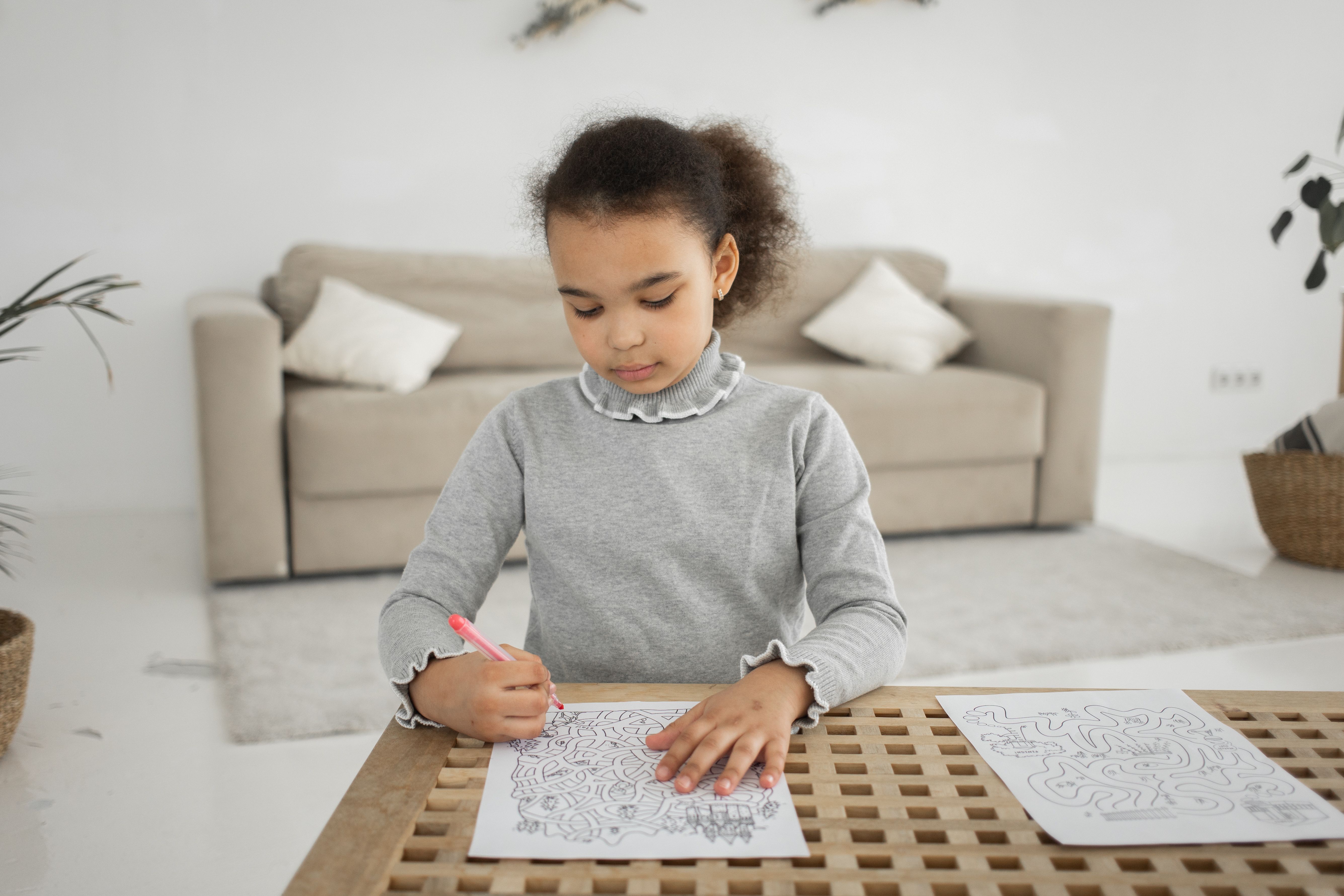
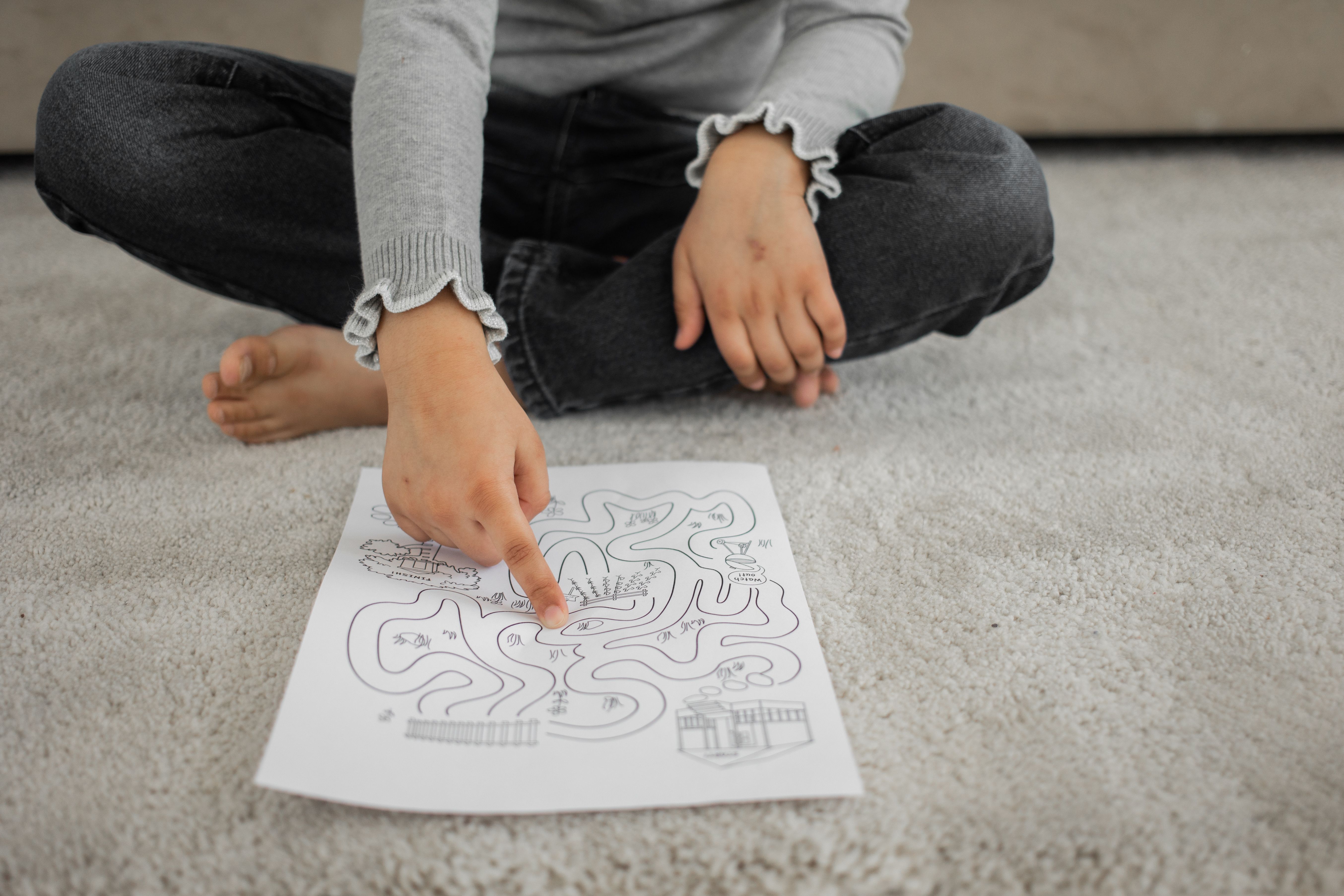
Printable maze worksheets are paper-based activities in which children trace a path from a starting point to a destination while avoiding dead ends or blocked routes.
For kindergarten children, mazes should be simple, visually clear, and enjoyable. They often feature familiar themes such as animals, vehicles, fruits, gardens, and friendly characters.
For example, a worksheet might ask a child to help a rabbit reach a carrot, guide a bee to a flower, or help a car reach a garage.
These activities combine entertainment with early childhood learning. Children practice following directions, recognizing shapes, controlling pencil movements, and thinking through simple problems.
Benefits of Maze Worksheets for Kindergarten
Simple maze activities can support several important developmental skills.
- Fine motor development: Tracing paths helps children practice the hand movements needed for drawing and early handwriting.
- Problem-solving: Children learn to explore possible routes and recognize when a path leads to a dead end.
- Visual tracking: Following a path encourages children to move their eyes across a page while maintaining attention.
- Concentration: Completing a maze gives children an opportunity to focus on one manageable task.
- Confidence: Successfully reaching the destination can provide a sense of achievement.
- Following directions: Instructions such as “Start at the rabbit and find the carrot” help children practice understanding simple tasks.
Mazes should be treated as one part of a varied learning routine rather than a replacement for drawing, play, reading, and other hands-on activities.
Step 1: Choose an Age-Appropriate Maze Theme
The first step in creating printable maze worksheets for kindergarten is selecting a theme that will interest young children.
A familiar theme makes the activity easier to understand because children can immediately recognize the goal. Instead of presenting a maze as an abstract puzzle, connect it to a small story or everyday situation.
Popular Maze Themes for Kindergarten
Consider these child-friendly ideas:
ThemeStarting PointDestinationAnimalsPuppyDoghouseFarmFarmerBarnNatureBeeFlowerFoodRabbitCarrotVehiclesCarGarageSpaceAstronautSpaceshipOceanFishCoral reefGardenButterflyFlowerSchoolChildSchool bagHolidaysSanta ClausGift box
Choose one main theme for each worksheet. Too many unrelated illustrations can distract children from the puzzle itself.
Match the Theme to the Learning Goal
You can also connect maze themes to classroom topics.
For example:
- Use an animal maze during a lesson about pets.
- Create a flower maze during a nature activity.
- Use a number-themed maze to reinforce number recognition.
- Design a fruit maze during a lesson about healthy foods.
- Create a transportation maze when teaching children about vehicles.
This approach makes printable kindergarten maze worksheets useful for both entertainment and structured learning.
Step 2: Decide the Difficulty Level
One of the most important parts of designing kindergarten mazes is choosing an appropriate difficulty level.
A maze that is too complicated can frustrate a child, while an extremely easy maze may not provide enough of a challenge. Start with a simple design and increase the difficulty gradually.
Easy Mazes for Beginners
For children who are new to maze activities, use:
- One obvious starting point.
- One clearly marked destination.
- Wide paths.
- A small number of turns.
- Few or no confusing dead ends.
- Large spaces for pencil movement.
An easy maze might contain a single winding path with three or four turns. The child can concentrate on following the route rather than navigating a complicated puzzle.
Medium Mazes for Developing Skills
Once children are comfortable with basic mazes, introduce:
- More turns and intersections.
- A few dead ends.
- Several possible routes.
- Slightly narrower paths.
- Simple obstacles that require careful observation.
The goal is to encourage thinking without making the worksheet unnecessarily difficult.
Advanced Kindergarten Mazes
Some older or more experienced kindergarten children may enjoy more challenging designs featuring:
- Additional intersections.
- Several dead ends.
- A longer route.
- Simple directional instructions.
- A small number of visual distractions.
Keep the paths large enough for young children to trace comfortably. Advanced should mean more thoughtful problem-solving, not tiny passages or confusing layouts.
Recommended Maze Difficulty Guide
DifficultyPath DesignBest UseVery easyFew turns and one clear routeFirst-time learnersEasySeveral turns and wide pathsEveryday practiceMediumMore intersections and dead endsChildren familiar with mazesChallengingLonger routes and additional decisionsExtra practice for confident learners
These are practical design guidelines rather than strict age-based rules. Children's fine motor skills, confidence, and puzzle experience vary.
Step 3: Plan the Worksheet Layout
Before drawing the maze, decide how the worksheet will look when printed.
A clean layout helps children understand the activity quickly and gives them enough room to work.
Include the Essential Elements
A kindergarten maze worksheet should generally contain:
- A short title: For example, “Help the Bee Find the Flower.”
- Simple instructions: Use one short sentence explaining the task.
- A starting point: Label it “START” or use an obvious starting illustration.
- A destination: Label it “FINISH” or show the target object.
- The maze itself: Place the puzzle in the main area of the page.
- A name and date field: Useful for classroom worksheets.
- Optional decorations: Include only a few small illustrations that support the theme.
Avoid filling every empty area with text or artwork. White space makes the worksheet easier to read and gives children a clear visual focus.
Choose the Right Page Size
For most home and classroom printers, US Letter and A4 are practical options.
Page SizeDimensionsCommon UseUS Letter8.5 × 11 inchesUnited StatesA4210 × 297 mmIndia and many other countries
A portrait layout works well for many simple mazes, although landscape pages can be useful for wider or more complex designs.
Leave enough margin around the edges so that important content is not cut off by the printer.
Step 4: Draw a Simple Maze
Now it is time to create the maze.
You can draw it by hand, use a drawing application, create shapes in a document editor, or use an online design tool. The best method depends on your skills and the number of worksheets you want to produce.
Method 1: Draw a Maze Manually
Drawing a maze by hand is a good option for creating a quick, personalized worksheet.
Follow these steps:
- Draw a large rectangular area for the puzzle.
- Mark the starting point on one side.
- Mark the destination at another location.
- Draw a winding path connecting the two points.
- Add walls around the path.
- Introduce a few dead ends if appropriate for the difficulty level.
- Check that the correct route remains open.
- Erase unnecessary marks and make the lines clean.
Use a ruler if you want straight walls and consistent spacing.
If you are creating a worksheet for young beginners, avoid complicated crossings or paths that are difficult to distinguish.
Method 2: Use an Online Design Tool
A browser-based design tool can make it easier to create attractive worksheets without installing specialized software.
A typical workflow is:
- Open your preferred design application.
- Create a new A4 or US Letter document.
- Add a title and simple instructions.
- Draw the maze using lines, rectangles, or other available shapes.
- Add themed illustrations at the beginning and end.
- Adjust line thickness and spacing.
- Export the finished worksheet as a PDF.
PuzzleToolsLab.com can also be presented as a useful starting point for exploring puzzle-related tools and activities. Before publishing a worksheet or recommending a specific feature, verify that the relevant tool is available and supports the intended task.
Method 3: Create a Maze Using a Grid
A grid-based method is useful when you want more consistent spacing across multiple worksheets.
Start with a grid of squares and treat each square as a possible section of the route. Leave openings between selected squares and use walls to block unwanted paths.
For a simple maze:
- Use a small grid.
- Connect the starting square to the destination.
- Add a few turns.
- Create limited dead ends.
- Check that the solution is possible.
A grid can help you produce a series of worksheets with consistent visual proportions.
Step 5: Make the Maze Easy to Print
A worksheet that looks attractive on a computer screen may not print well. Kindergarten worksheets should remain clear when printed on an ordinary home or classroom printer.
Use High-Contrast Lines
Black lines on a white background are usually the most practical choice.
They are easy to see, work well on standard printers, and do not require expensive colored ink.
Recommended design choices include:
- Dark maze walls.
- A white background.
- Clear start and finish labels.
- Simple outlines for illustrations.
- Minimal shaded areas.
- Consistent line thickness.
Color can make worksheets appealing, but the maze should remain usable when printed in black and white.
Choose Appropriate Line Thickness
Very thin walls may disappear on some printers. Extremely thick walls can make the maze feel crowded.
Use lines that remain visible at normal print size. Then print a test page and check whether the paths, walls, and illustrations are easy to distinguish.
Leave Enough Space Between Walls
Young children need room to move a pencil through the maze without constantly touching the walls.
Avoid narrow corridors, tightly packed intersections, and tiny dead ends. A path that looks large on a monitor may feel much smaller on paper.
The final print test is the best way to judge whether the spacing is comfortable.
Step 6: Add Educational Features
Printable maze worksheets can reinforce more than problem-solving. Small educational additions can make them useful for different classroom activities.
However, the maze should remain the main activity. Avoid adding so many extra tasks that the page becomes overwhelming.
Add Letters and Numbers
For example, create a maze in which children follow a route from the number 1 to the number 10.
Other ideas include:
- Finding the letter A.
- Following a sequence of numbers.
- Connecting uppercase and lowercase letters.
- Navigating from one shape to another.
- Following a simple color pattern.
Check that any sequence or rule is correct before sharing the worksheet.
Include Simple Counting Activities
A worksheet might ask children to count three apples before helping a character reach a basket.
You could also include a small question below the maze, such as “How many flowers can you see?”
Keep the number of additional questions low so that the activity remains appropriate for kindergarten learners.
Combine Mazes With Drawing
Another option is to invite children to color the destination after completing the puzzle.
For example:
“Help the butterfly reach the flower. Then color the flower.”
This creates an opportunity to practice pencil control and creative expression without making the maze more complicated.
Step 7: Test the Maze Before Publishing
A maze should never be published without checking its solution.
A design may look correct but contain a blocked passage, an accidental opening, or a route that does not actually reach the destination.
Use a Simple Quality-Check Process
Before exporting the worksheet, verify the following:
- The start and finish are clearly marked.
- At least one valid route connects them.
- The route does not pass through a solid wall.
- Dead ends are intentional.
- The paths are wide enough for children.
- The illustrations do not cover the maze.
- Instructions are short and understandable.
- The worksheet prints without cutting off important content.
- The final PDF opens correctly.
If possible, ask a teacher, parent, or another adult to review the worksheet. Their feedback may reveal confusing instructions or layout problems that you overlooked.
For children who are ready, observe how they approach the maze. If several children misunderstand the starting point or repeatedly lose track of the path, consider simplifying the design.
Step 8: Export the Worksheet as a Printable PDF
PDF is generally a convenient format for distributing printable worksheets because it helps preserve page layout across different devices and operating systems.
After completing your design, export it as a PDF rather than relying only on a screenshot or a low-resolution image.
Recommended Export Settings
Use these practical guidelines:
SettingRecommendationPage sizeA4 or US LetterOrientationPortrait or landscape, as appropriateBackgroundWhiteMaze linesDark and clearly visibleColor modeGrayscale-friendlyMarginsSuitable for home printersFile formatPDF for distributionFinal checkOpen and print a test copy
If you also want to publish worksheet previews on a website, export a separate image for the preview. Keep the downloadable PDF as the primary printable resource.
Why PDF Is Useful for Worksheets
PDF files are convenient because they can be opened on many devices, printed multiple times, and shared with teachers or parents.
Make sure your download link works and that the file does not require unnecessary registration or special software unless you clearly explain that requirement.
Step 9: Create a Collection of Kindergarten Maze Worksheets
Once you have designed one successful worksheet, you can use the same process to build a complete activity collection.
A collection gives parents and teachers more choices and helps children practice progressively challenging puzzles.
Organize Worksheets by Difficulty
Consider creating three groups:
Beginner mazes
- Wide paths.
- Few turns.
- Minimal dead ends.
- Large start and finish illustrations.
Intermediate mazes
- More intersections.
- Several possible routes.
- A few dead ends.
- Familiar themes.
Challenge mazes
- Longer paths.
- More decisions.
- Additional visual obstacles.
- Optional educational instructions.
Make sure the actual difficulty matches the label. A worksheet described as easy should not contain a maze with numerous confusing branches.
Build a Themed Worksheet Series
You could create a collection with themes such as:
- Farm animal mazes.
- Ocean animal mazes.
- Space adventure mazes.
- Alphabet mazes.
- Number mazes.
- Seasonal and holiday mazes.
Consistent titles, margins, line styles, and difficulty labels make the collection look organized and professional.
If you publish the worksheets online, use descriptive filenames such as easy-animal-maze-kindergarten.pdf. A clear filename helps you manage files and makes the subject of each download easier to identify.
Common Mistakes to Avoid When Creating Maze Worksheets
Even a simple maze can become frustrating if the design does not account for the needs of young children.
Making the Maze Too Difficult
Too many turns and dead ends can discourage beginners.
Better approach: Start with a straightforward route and introduce complexity gradually.
Using Tiny Paths
Narrow paths make it harder for children to trace the route accurately.
Better approach: Print the worksheet at its intended size and widen any sections that feel cramped.
Adding Too Many Decorations
Excessive illustrations, patterns, and colors can distract children from the puzzle.
Better approach: Use one main theme and keep decorative elements outside the maze whenever possible.
Forgetting to Test the Solution
A maze with no valid route cannot be completed correctly.
Better approach: Trace the complete solution yourself before publishing or printing the worksheet.
Relying Only on Color
Some families and classrooms use black-and-white printers.
Better approach: Make the maze understandable through shapes, lines, and labels rather than color alone.
Using Confusing Instructions
Long instructions can make a simple task unnecessarily difficult.
Better approach: Use direct language such as “Help the puppy find its home.”
Best Practices for Creating High-Quality Printable Mazes
For consistently useful worksheets, follow these recommendations:
- Design for the child first. Prioritize readability, clear instructions, and comfortable paths over decorative effects.
- Keep each worksheet focused. One maze and one clear goal are usually enough.
- Use familiar objects. Animals, toys, food, and vehicles help children understand the activity.
- Check every solution. Verify the route before sharing the file.
- Make printing simple. Provide a standard-size PDF with a white background and suitable margins.
- Offer different difficulty levels. Let parents and teachers choose activities based on children's abilities.
- Use original or properly licensed artwork. Check the usage rights of illustrations and fonts before distributing worksheets.
- Gather feedback. Improve future worksheets based on real printing and classroom experiences.
- Keep accessibility in mind. Use readable labels, strong contrast, and layouts that do not rely on color alone.
- Provide clear download information. Explain the file format and page size so users know what to expect.
These practical steps help you create resources that are genuinely useful rather than merely attractive.
Frequently Asked Questions
1. How do you create printable maze worksheets for kindergarten?
Choose a familiar theme, draw a simple maze with wide paths, mark the starting point and destination, and add short instructions. Check that the solution works, then export the worksheet as a printable PDF.
2. What is the best maze difficulty for kindergarten children?
Start with easy mazes that have wide paths, a few turns, and limited dead ends. Increase the number of intersections gradually as children become more confident. Choose the difficulty based on each child's experience and abilities rather than age alone.
3. Can I create kindergarten maze worksheets for free?
Yes. You can draw mazes by hand or use a free drawing or document application. Some online design tools also provide free features. Check the current pricing and licensing terms before using a tool or distributing its templates.
4. What paper size should I use for printable maze worksheets?
A4 and US Letter are both practical choices. A4 is widely used in India and many other countries, while US Letter is common in the United States. Choose the format that suits your intended audience.
5. Should kindergarten maze worksheets be in color or black and white?
Black-and-white worksheets are economical and easy to print. Color illustrations can make a worksheet more engaging, but the maze itself should remain clear when printed without color.
6. How wide should paths be in a kindergarten maze?
There is no single width suitable for every child. Use visibly wide paths that allow comfortable pencil movement, especially for beginners. Print a test copy to confirm that the paths are not too narrow.
7. How can I make maze worksheets educational?
Add simple activities involving letters, numbers, shapes, counting, or colors. For example, children can follow a route from one number to another or help an animal reach an object associated with a classroom topic.
8. Why should I save printable maze worksheets as PDFs?
PDF files generally preserve the intended page layout and are easy to share and print. They are a practical format for worksheets that parents and teachers may use on different devices.
9. How can I check whether a maze has a correct solution?
Start at the entrance and trace a complete route to the destination. Confirm that the route does not cross solid walls and that any dead ends are intentional. Test-printing the worksheet also helps identify visual problems.
10. Can printable maze worksheets help with handwriting readiness?
Maze activities can provide practice with pencil control, hand movements, and visual tracking, which are useful components of early writing development. However, mazes are only one of many activities that support handwriting readiness.
Conclusion
Creating printable maze worksheets for kindergarten does not require advanced design skills. By choosing familiar themes, using age-appropriate paths, keeping instructions simple, and checking every solution, you can create engaging activities that support early learning.
Start with a basic maze, print a test copy, and adjust the spacing and difficulty until the worksheet is comfortable for young children to use. You can then expand your collection with animal puzzles, number mazes, alphabet activities, and other themed challenges.
Most importantly, design each worksheet around the child's experience. A successful kindergarten maze should be easy to understand, enjoyable to complete, and challenging enough to encourage problem-solving without causing frustration.
With a consistent design process and careful quality checks, you can create printable maze worksheets that parents, teachers, and children will find useful for everyday learning.